Walk the route first
A site visit turns an address into an operating plan. We review the drop point, storage access, pedestrian movement, vehicle capacity, lighting, and the path attendants will use between each location.
The whole arrival window
Event valet parking in Chicago for weddings, galas, company events, fundraisers, and private gatherings with a defined arrival and departure plan.
The operating picture
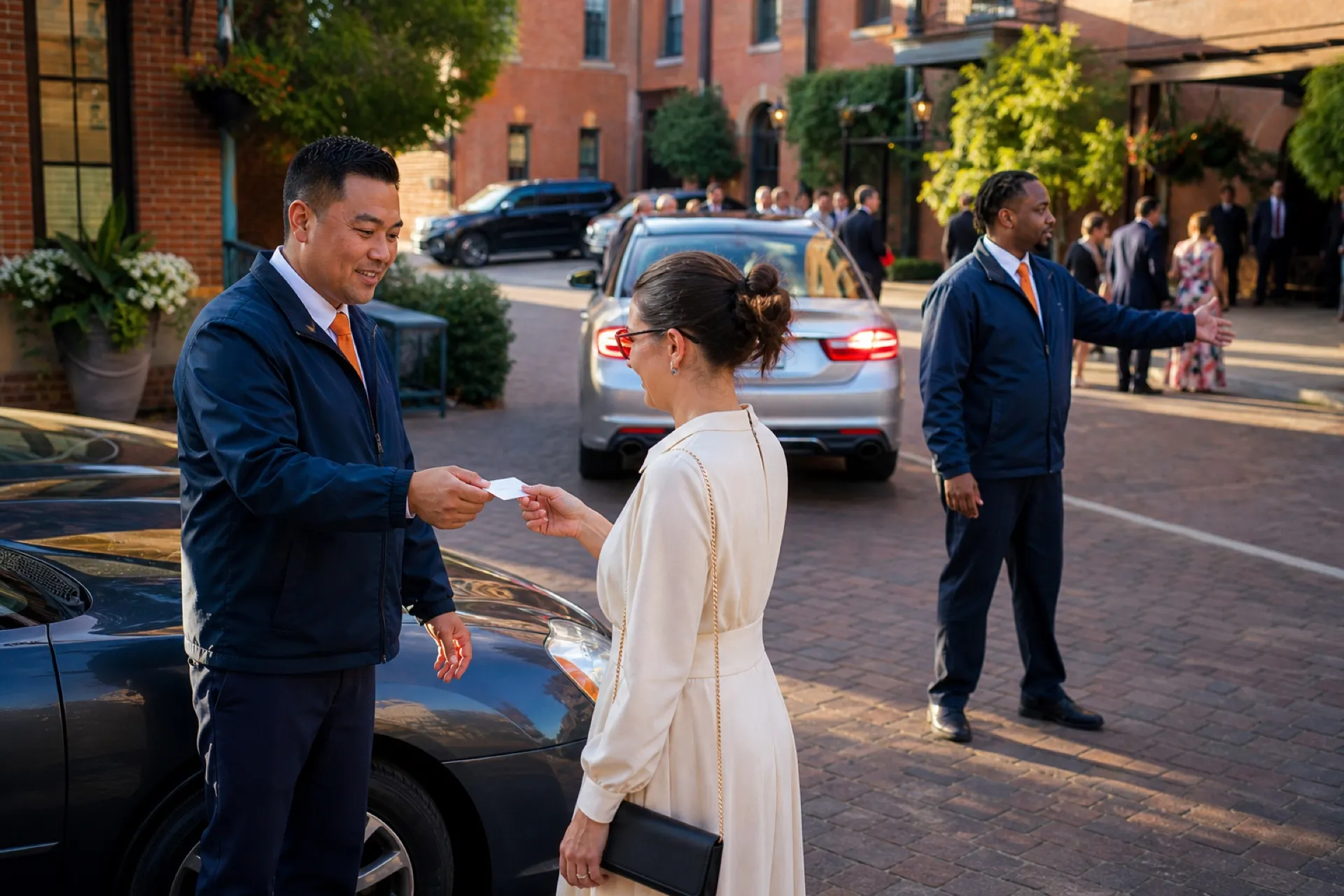
Event valet parking in Chicago is a short operation with a sharp peak. The team needs to arrive before the first guest, understand the storage route, set the arrival lane, and be ready for a concentrated departure. We plan backward from the guest count and venue constraints so the curb is ready before the invitation time.
Often used by
At the curb
A site visit turns an address into an operating plan. We review the drop point, storage access, pedestrian movement, vehicle capacity, lighting, and the path attendants will use between each location.
Guest count is only one input. Invitation time, ceremony timing, shuttle arrivals, neighborhood traffic, parking distance, and expected departure pattern all affect the crew shape.
The lead contact receives clear timing and communication points. If dinner runs late or weather changes, the parking team knows who can make the call and how the operation should adjust.
Operating sequence
These are the working phases the onsite lead and property contact need to recognize during service.
Setup time is scheduled before the first published arrival. The lead confirms the guest entrance, vehicle count assumption, storage capacity, signs, traffic positions, planner contact, vendor access, shuttle activity, and any moment when the arrival route must temporarily change.
Event arrivals are managed as a timed queue, not a steady daily pattern. Greeters keep claims and guest directions moving while runners use the planned storage route and the lead tracks remaining capacity, unusual vehicles, accessibility needs, and changes from the venue.
Departure timing follows speeches, performances, shuttle times, weather, and venue closeout. Claims can be prepared without crowding the drive, but vehicles are staged only in approved positions and released through a protected handoff.
Proposal inputs
Crew size follows the arrival curve, round-trip vehicle time, and the duties shared with property staff.
The proposal needs more than a maximum guest count. Invitation time, ceremony location, program length, meal format, shuttle use, local attendees, hotel blocks, and an expected vehicle range help define both arrival intensity and the likely departure shape.
Spaces are identified with the owner or authorized operator before service. Capacity, reserved areas, garage clearances, access credentials, pedestrian return, lighting, unusual vehicles, and the overflow trigger are recorded together.
Caterers, production crews, buses, rideshare pickups, deliveries, security, and emergency access can intersect with valet setup. One decision contact coordinates those movements and separates them by place or time where the property allows.
Site review
Chicago service areas
See how traffic, curb access, and storage routes differ across Chicago neighborhoods and Oak Brook.
High-volume downtown movement with sharp weekday, theater, event, and hotel check-in peaks.
A hospitality-heavy neighborhood with strong evening demand and frequent curb competition.
A fast-changing mix of restaurants, residences, offices, and event traffic west of downtown.
Dense hospitality and residential streets where presentation and neighbor access both matter.
A neighborhood setting with active commercial corridors and quieter residential side streets.
Institutional, residential, and cultural destinations with distinct daytime and event peaks.
Larger suburban properties with hotel, office, dining, healthcare, and event demand.
Questions about events
Earlier is better when street access, permits, or third-party parking are involved. A complete address, guest estimate, invitation time, and venue contact are enough to start the site review.
Yes. Residential plans pay special attention to neighbors, driveway access, lighting, pedestrian paths, and where attendants may safely store vehicles.
The operating brief names the venue or planner contact who can confirm a revised arrival or release time. Changes to access, guest count, storage, or service duration need to reach the valet lead as early as possible.
Events
Send the address, service hours, expected vehicle pattern, and property contact. We can focus the first call on the conditions at that entrance.