Match the reservation curve
Staffing follows the dining room's arrival and departure pattern. Early tables, the main seating wave, private dining, and late-night closeout can each require a different curb setup.
A calm curb at dinner rush
Restaurant valet parking in Chicago for dining rooms where reservations, takeout, rideshare traffic, and neighborhood constraints meet at one door.
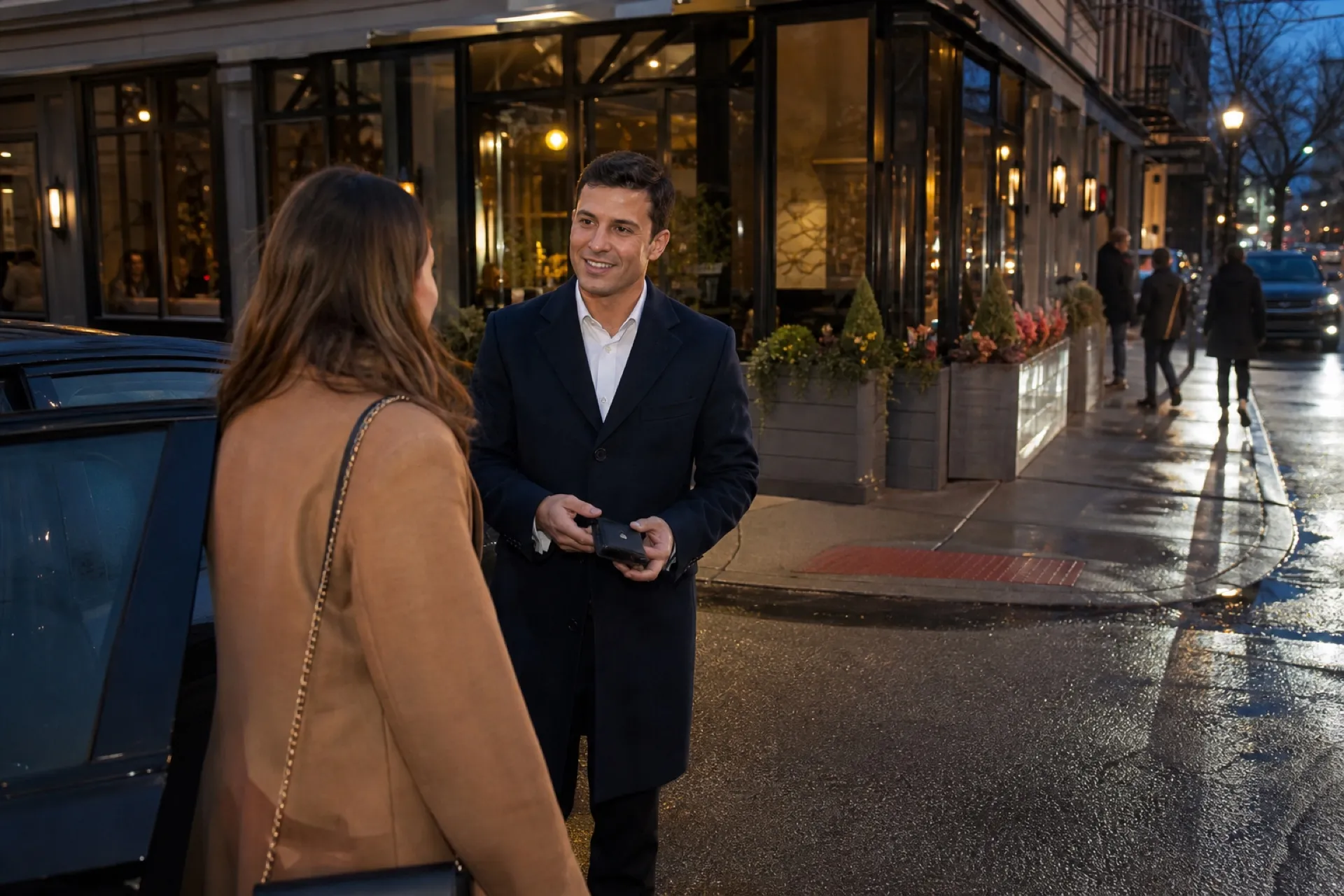
The operating picture
Restaurant valet parking in Chicago has to move with the reservation book. It also has to share the street with delivery drivers, rideshare pickups, pedestrians, and neighboring businesses. We plan the arrival lane, storage route, claim process, and shift coverage around the room's real peak periods.
Often used by
At the curb
Staffing follows the dining room's arrival and departure pattern. Early tables, the main seating wave, private dining, and late-night closeout can each require a different curb setup.
Chicago restaurant streets can be narrow and busy. Pedestrian paths, bike lanes, residential neighbors, loading activity, and permitted curb space all affect where the stand can operate.
Guests need to recognize the stop before slowing into traffic. The stand, signs, claim process, and attendant positions must read quickly from the driver's seat.
Operating sequence
These are the working phases the onsite lead and property contact need to recognize during service.
The opening check places the podium and signs within the approved footprint, confirms the storage access, and notes deliveries, patio activity, private dining, or street conditions that could change the plan. The restaurant contact and valet lead should agree on the expected reservation curve.
The curb lead watches both incoming guests and retrieval requests because the first seating may depart as the main seating arrives. Attendant positions can shift as the balance changes, while the guest stop, pedestrian path, and neighboring access remain clear.
Late checks, bar guests, private rooms, and staff vehicles can extend beyond the dining room's primary rush. A closeout procedure confirms the remaining claims, keys, stored vehicles, equipment, restaurant contact, and the point when the final vehicle has been released.
Proposal inputs
Crew size follows the arrival curve, round-trip vehicle time, and the duties shared with property staff.
Pair cover counts with reservation intervals, expected table turns, private dining, bar traffic, patio season, and nights that behave differently. That record separates opening coverage from the main rush and closeout.
The route must be measured from guest handoff to parked vehicle and back to the podium. Turns, signals, garage entry, elevator or stair access, walking conditions, and late-night restrictions all affect practical retrieval timing and staffing.
Deliveries, takeout couriers, rideshare drivers, buses, patios, bike lanes, neighboring businesses, and residents may need the same few feet of curb. The proposal states what space is authorized and who resolves a conflict.
Site review
Chicago service areas
See how traffic, curb access, and storage routes differ across Chicago neighborhoods and Oak Brook.
High-volume downtown movement with sharp weekday, theater, event, and hotel check-in peaks.
A hospitality-heavy neighborhood with strong evening demand and frequent curb competition.
A fast-changing mix of restaurants, residences, offices, and event traffic west of downtown.
Dense hospitality and residential streets where presentation and neighbor access both matter.
A neighborhood setting with active commercial corridors and quieter residential side streets.
Institutional, residential, and cultural destinations with distinct daytime and event peaks.
Larger suburban properties with hotel, office, dining, healthcare, and event demand.
Questions about restaurants
Yes. Restaurant programs can be planned around peak nights, seasonal patios, private events, or a full weekly schedule. The best pattern follows reservation and traffic data.
The site review checks the route, access rights, lighting, walk-back conditions, and retrieval time. Staffing and guest messaging are finalized only after off-site storage is confirmed.
Start with reservation counts by interval, average party size, private dining, likely vehicle share, table-turn timing, and nearby event activity. Several comparable nights provide a better baseline than one unusually busy evening.
Restaurants
Send the address, service hours, expected vehicle pattern, and property contact. We can focus the first call on the conditions at that entrance.