Protect everyday access
The arrival zone cannot trap a neighbor, block a driveway, or create a blind pedestrian path. Those everyday movements set the boundary for a residential setup.
Hospitality without crowding the block
Private event valet in Chicago for dinners, celebrations, residential weddings, fundraisers, and small venues, planned around the exact block.
The operating picture
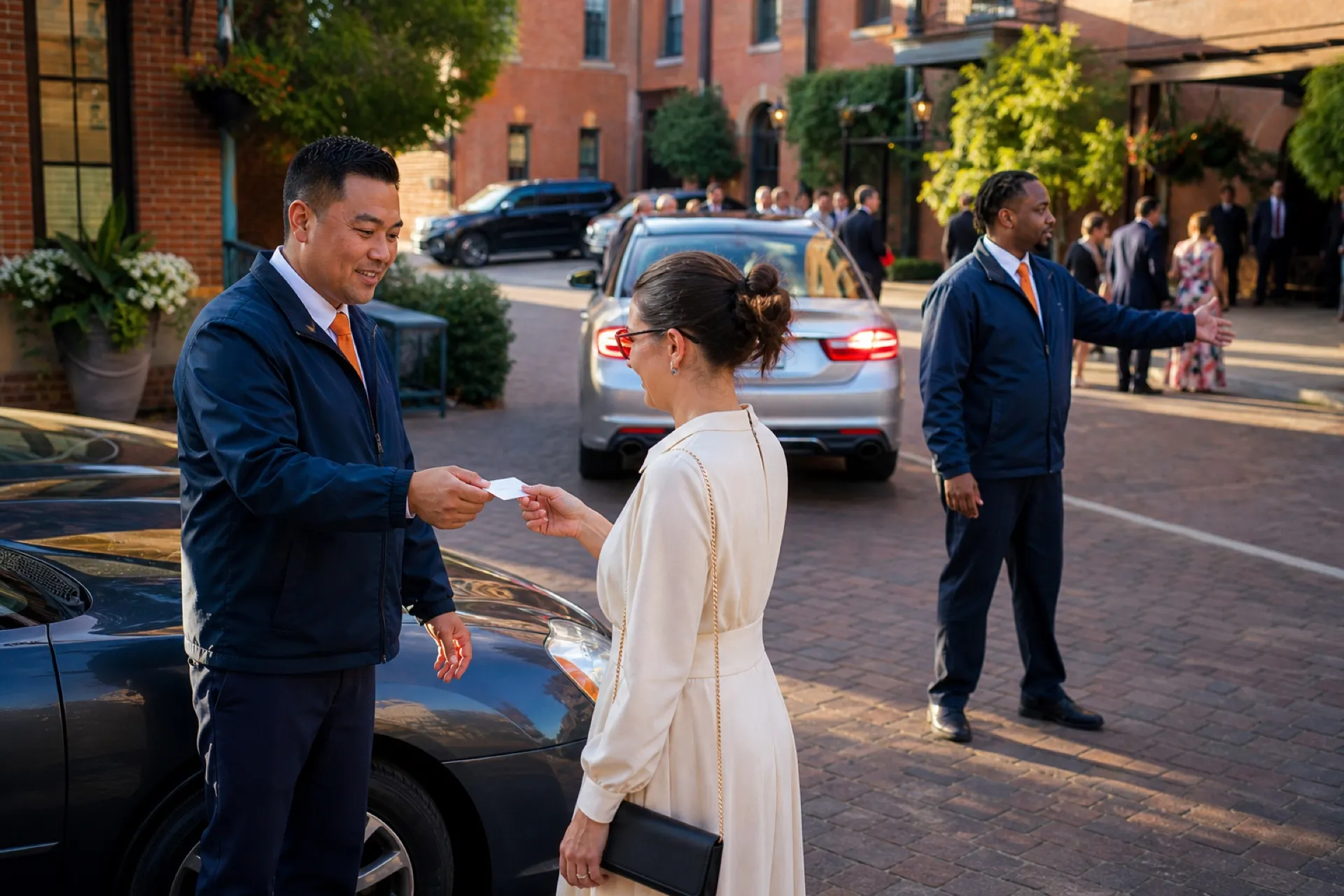
Private event valet in Chicago can place a surprising amount of traffic on a residential street. We plan where guests stop, where vehicles may be stored, how attendants move safely, and how the operation avoids blocking neighbors, driveways, or pedestrian routes.
Often used by
At the curb
The arrival zone cannot trap a neighbor, block a driveway, or create a blind pedestrian path. Those everyday movements set the boundary for a residential setup.
The stand, cones, lighting, key storage, and attendant positions are scaled to the site. The goal is a legible arrival without turning the block into a commercial loading zone.
Departure timing, last-call communication, equipment removal, and the final vehicle check are established before guests arrive.
Operating sequence
These are the working phases the onsite lead and property contact need to recognize during service.
Before guests arrive, the host or planner confirms the permitted stop, storage access, driveways that must remain open, lighting, weather equipment, neighbor concerns, and vendor timing. The podium and signs stay within the smallest footprint that remains visible to approaching drivers.
Vehicles are accepted through a clear claim handoff and moved along the approved route. The lead watches the number of cars waiting, keeps sidewalks and private access open, coordinates with caterers or shuttles, and contacts the host if arrivals depart from the estimate.
The host or planner signals the expected departure period and any program delay. At closeout, remaining claims, keys, and storage positions are reconciled, the final vehicle is released to the correct guest, and all temporary equipment is removed from the property and street.
Proposal inputs
Crew size follows the arrival curve, round-trip vehicle time, and the duties shared with property staff.
A vehicle estimate accounts for household pairs, rideshare use, shuttles, vendors, and guests coming from a ceremony or hotel block. A single invitation time requires different coverage than an open-house arrival spread across several hours.
The proposal depends on confirmed places to store vehicles. Legal street parking, private lots, borrowed drives, gated access, walking distance, lighting, weather, and vehicle-size limits determine the operating capacity.
Driveways, quiet hours, trash pickup, deliveries, pedestrian paths, snow conditions, and neighboring events can affect the block. Equipment stays compact, one onsite contact makes decisions, and the service has a firm cleanup time.
Site review
Chicago service areas
See how traffic, curb access, and storage routes differ across Chicago neighborhoods and Oak Brook.
High-volume downtown movement with sharp weekday, theater, event, and hotel check-in peaks.
A hospitality-heavy neighborhood with strong evening demand and frequent curb competition.
A fast-changing mix of restaurants, residences, offices, and event traffic west of downtown.
Dense hospitality and residential streets where presentation and neighbor access both matter.
A neighborhood setting with active commercial corridors and quieter residential side streets.
Institutional, residential, and cultural destinations with distinct daytime and event peaks.
Larger suburban properties with hotel, office, dining, healthcare, and event demand.
Questions about private homes
That depends on legal storage access, walking distance, street conditions, and the arrival window. A site review establishes a defensible vehicle capacity for the address.
The proposal can identify the podium, cones, signage, lighting, key storage, and weather equipment needed for the specific property.
Share the full address, event schedule, vehicle estimate, driveway restrictions, known neighbor concerns, vendor and shuttle timing, proposed parking access, and the host or planner who can approve an onsite adjustment.
Private homes
Send the address, service hours, expected vehicle pattern, and property contact. We can focus the first call on the conditions at that entrance.