One arrival team
Valet, bell, front desk, and security work best from the same picture of the curb. The operating plan defines who receives the guest, who moves the vehicle, and who communicates during a rush.
A practiced arrival
Hotel valet parking in Chicago for check-in waves, luggage, rideshare traffic, and overnight vehicle storage.
The operating picture
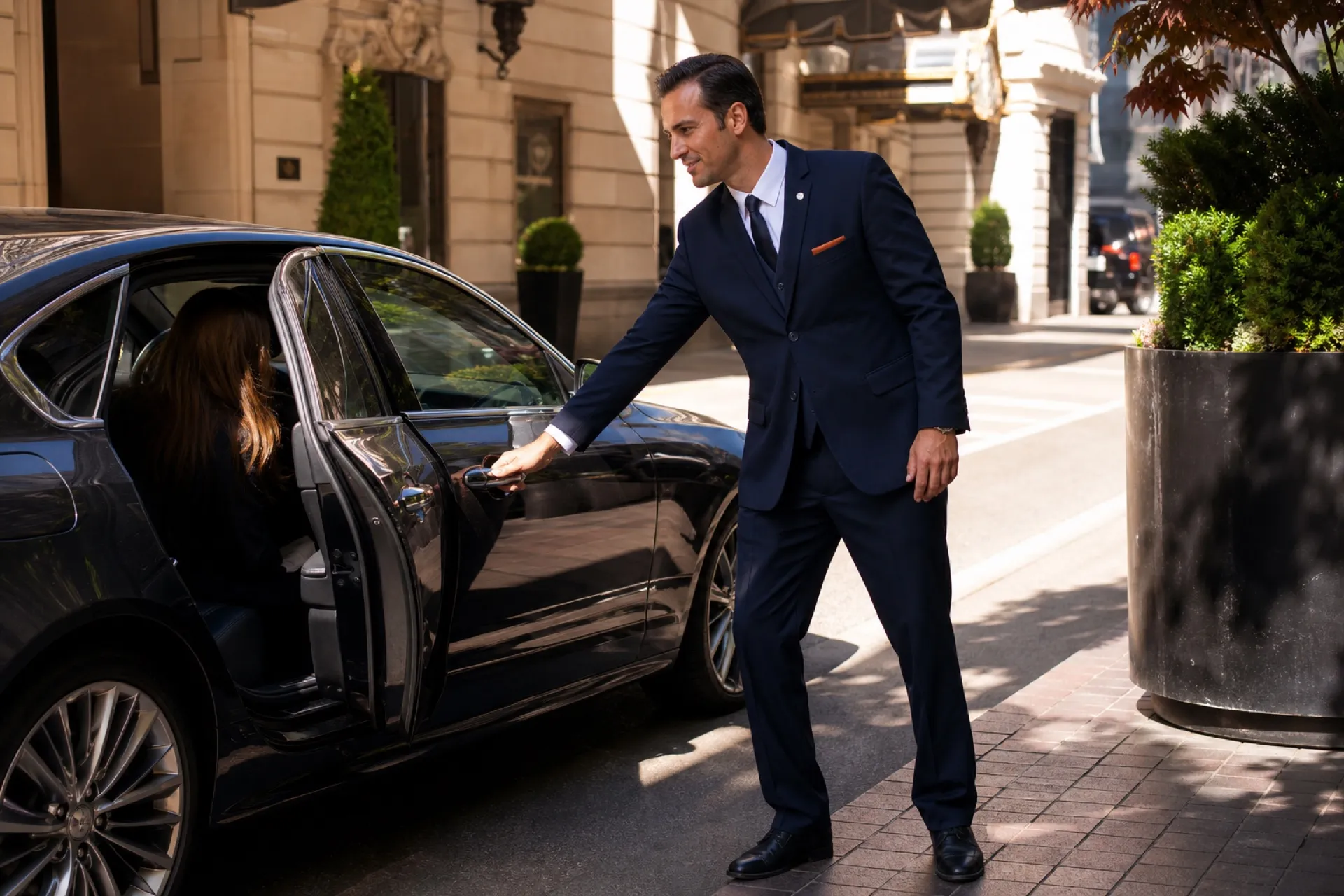
Hotel valet parking in Chicago rarely handles one arrival at a time. Luggage, taxis, rideshare drivers, tour vehicles, accessibility needs, and tired travelers all converge at the drive. We organize that traffic around the property and document the handoffs for front desk, bell, security, and valet staff.
Often used by
At the curb
Valet, bell, front desk, and security work best from the same picture of the curb. The operating plan defines who receives the guest, who moves the vehicle, and who communicates during a rush.
Garage access, off-site storage, loading zones, one-way streets, and event schedules all change the staffing pattern. The round trip matters more than a generic valet ratio.
Overnight programs need a consistent chain for keys, claim records, vehicle location, and early departures. Those details are documented before service begins.
Operating sequence
These are the working phases the onsite lead and property contact need to recognize during service.
The opening check confirms the guest drive, available storage positions, key cabinet, claim materials, garage access, and any group or banquet arrivals on the property schedule. Bell and front desk contacts should know the service lead and the route for urgent requests.
During the arrival peak, one role stays focused on greeting, luggage, claim information, and keeping the drive readable. Runners follow the approved storage route while the lead watches lane capacity, key status, rideshare overlap, and requests from inside the hotel.
Overnight keys and vehicle locations remain organized by the agreed system. Early departures, group release times, garage opening limits, and luggage needs can be reviewed before the morning rush so retrieval begins from a verified record rather than a verbal handoff.
Proposal inputs
Crew size follows the arrival curve, round-trip vehicle time, and the duties shared with property staff.
Room count alone does not describe the curb. Transient check-in, group blocks, restaurant reservations, banquet schedules, airline crews, resident vehicles, and checkout timing can create different peaks that need separate coverage assumptions.
The proposal identifies the garage or lot, usable spaces, access hours, clearance limits, entry credentials, overnight rules, and complete round trip. Those conditions determine how many vehicle movements a runner can complete.
Front desk, bell, security, engineering, event, and restaurant teams may all affect the drive. The scope names who updates arrival information, approves a temporary change, receives an incident report, and sends a guest retrieval request.
Site review
Chicago service areas
See how traffic, curb access, and storage routes differ across Chicago neighborhoods and Oak Brook.
High-volume downtown movement with sharp weekday, theater, event, and hotel check-in peaks.
A hospitality-heavy neighborhood with strong evening demand and frequent curb competition.
A fast-changing mix of restaurants, residences, offices, and event traffic west of downtown.
Dense hospitality and residential streets where presentation and neighbor access both matter.
A neighborhood setting with active commercial corridors and quieter residential side streets.
Institutional, residential, and cultural destinations with distinct daytime and event peaks.
Larger suburban properties with hotel, office, dining, healthcare, and event demand.
Questions about hotels
Yes. Regular hotel arrivals can share coverage with restaurant service and scheduled banquet peaks. Staffing and staging are adjusted for the periods when those flows overlap.
The site review maps storage, key control, early departures, garage access, and communication with the front desk. The final workflow follows the property's existing guest-service procedures.
Useful inputs include recent arrival and departure patterns, group and banquet schedules, the proposed storage location, garage access rules, service hours, existing bell procedures, and the property contacts who manage the guest drive.
Hotels
Send the address, service hours, expected vehicle pattern, and property contact. We can focus the first call on the conditions at that entrance.